
Clitoris 2026: The medical revolution of its 3D mapping in micrometers – Implications for health, surgery, and female pleasure.

Introduction: Why has the clitoris remained the least studied genital organ in medical history?
For centuries, the clitoris has been relegated to the status of a mysterious, even taboo, organ. In the 16th century, some anatomists still referred to it as a "shameful member." Even in 1998, the first detailed studies of its anatomy revealed that the majority of the organ – about 80% – is hidden in the pelvic region, far from the small external part that is visible. However, this complex structure plays a central role in female pleasure and reproductive health. Today, an international team led by Ju Young Lee of Amsterdam UMC, in collaboration with the European Synchrotron Radiation Facility (ESRF) in Grenoble, has shattered this historical ignorance by creating the first 3D micrometer-scale map of the clitoris' nerves.
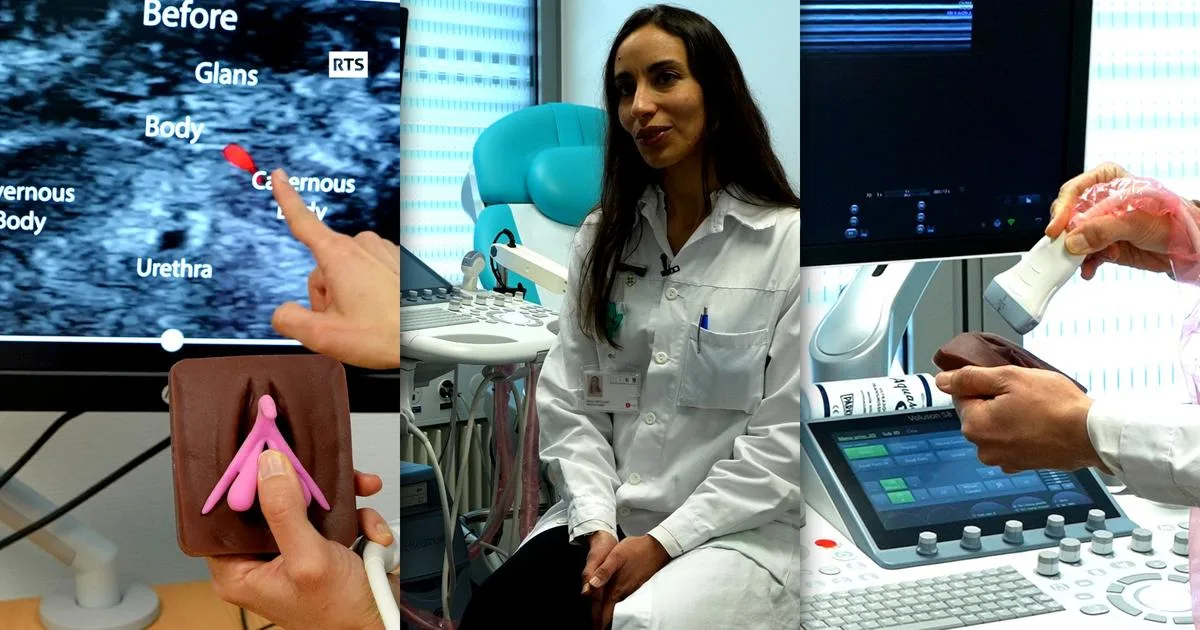
The revolutionary technology: How a particle accelerator made it possible to map the clitoris' nerves in 3D at the micrometer scale
Thanks to a synchrotron, an imaging technology using particle accelerators, researchers were able to obtain 3D scans with unprecedented precision, at the micron scale. This method made it possible to visualize previously invisible nerve structures, revealing a network that is much denser and more extensive than what medical textbooks describe. "The images show that some of the information taught in medicine is incorrect," emphasizes The Guardian. This technological advance was made possible thanks to organ donations, providing scientists with samples of female pelves for their research.
An unprecedented scientific process
- High-energy X-ray imaging: Allows for the distinction of nerves from other tissues with micrometer precision.
- 3D modeling: Researchers reconstructed the pathways of the clitoris' five main nerves, including the dorsal nerve, which is essential for sensitivity.
- Comparison with historical data: The results show that traditional representations of the clitoris, often compared to a reduced version of the penis, were largely incomplete.
Key discovery: A nerve network much more complex than expected - what the images reveal about the anatomy of the clitoris
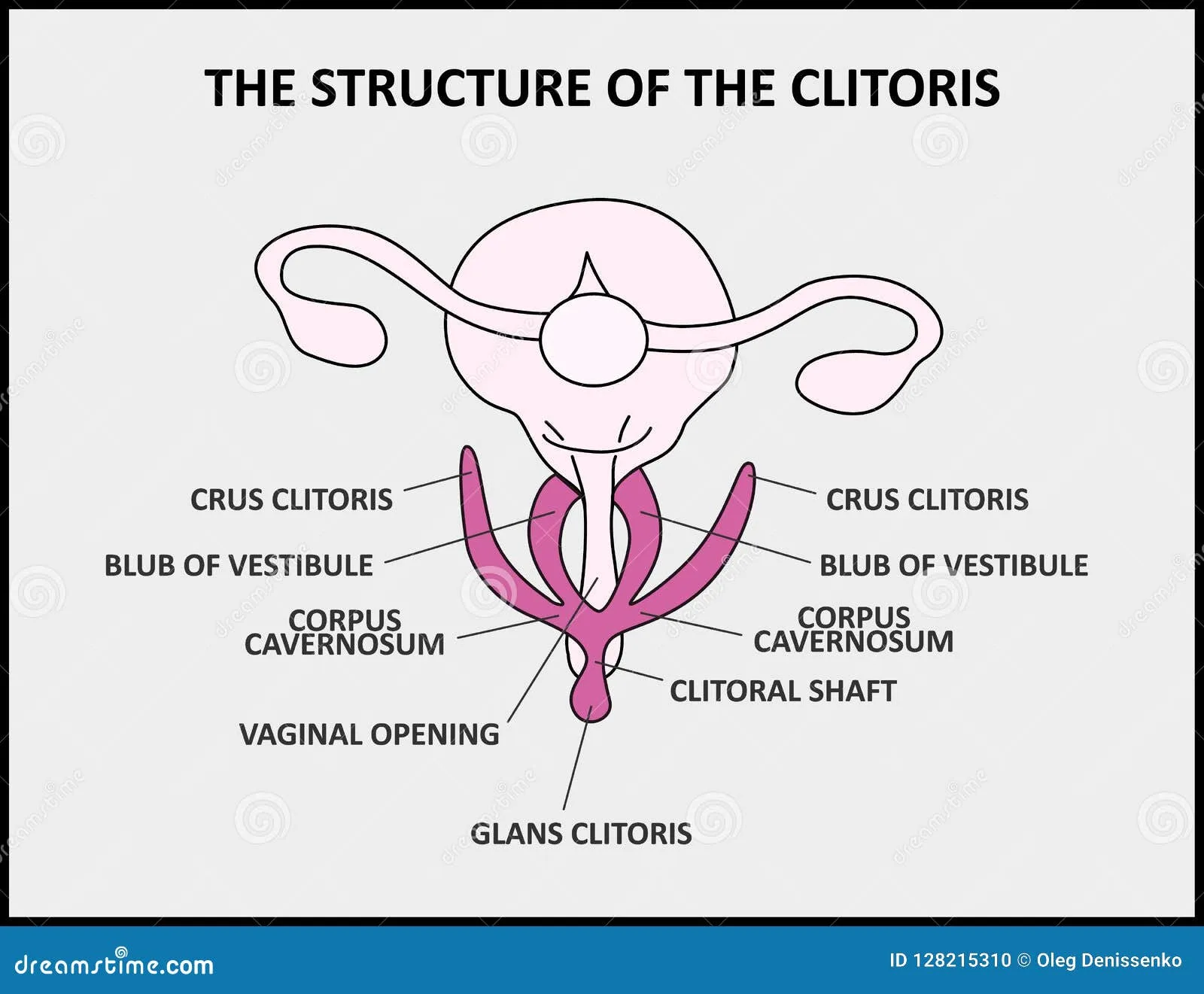
The images obtained reveal a dense and branching nerve network, much more extensive than what was described in medical textbooks. Here are the main discoveries:
- The dorsal nerve, the main sensory nerve, has a tree-like path, with branches reaching up to 0.7 millimeters in diameter.
- Some branches innervate areas far from the clitoral gland, such as the mons pubis or the vulvar lips, increasing the sensitive surface area.
- The majority of the nerves are concentrated in the internal part of the clitoris, hidden under the tissues, which explains why surgical procedures could until now cause unintentional nerve damage.
"This study shows that the clitoris is not a simple 'pleasure button', but a complex organ, with an extensive innervation that influences much more than just sexuality."
— Ju Young Lee, principal investigator, Amsterdam UMC
Medical impact: How this mapping could prevent nerve damage during gynecological operations
One of the most immediate applications of this discovery concerns gynecological surgery. Until now, doctors were unaware of the exact extent of the clitoral nerves, which could lead to accidental nerve damage during operations such as:
- Reconstructive surgeries after female genital mutilation.
- Gender-affirming surgeries for transgender people.
- Treatments for pelvic cancers.
- Operations for incontinence or prolapse.
By knowing the exact path of the nerves, surgeons will be able to avoid risky areas, thus reducing the risk of chronic pain, sexual dysfunction, or loss of sensitivity after surgery. According to Science et Vie, this advance could improve the prevention of sensory impairment and offer a better quality of life for patients.
New horizons: Reconstructive surgery, pelvic pain, and gender affirmation - the concrete applications of this study
1. Reconstructive surgery after female genital mutilation
Female genital mutilation (FGM) affects millions of women worldwide, often leading to nerve damage and loss of sensitivity. With this mapping, surgeons will be able to reconstruct the nerves with unprecedented precision, partially or totally restoring sexual function and sensitivity.
2. Management of chronic pelvic pain
Vulvar pain, often misdiagnosed, could now be better understood thanks to this new anatomy. Doctors will be able to identify the nerve areas involved and offer targeted treatments, such as neuromodulation or local infiltrations.
3. Gender affirmation and transgender health
For transgender people undergoing gender-affirming surgeries, this mapping makes it possible to avoid damage to the clitoral nerves, preserving their sensitivity and pleasure. A major step forward for a more inclusive medicine.
Female pleasure reevaluated: What does this discovery change for women's sexuality and intimate health?
Beyond the medical applications, this study redefines our understanding of female pleasure. Here's what it implies:
- Extended sensitivity: The nerves of the clitoris are not limited to its external part, but extend to areas such as the mons pubis or the labia, which explains why some women feel pleasure in areas far from the glans.
- An organ much more complex than the penis: Contrary to popular belief, the clitoris is not a miniature version of the penis. Its unique nerve network makes it a unique organ with specific functions.
- An impact on sexuality: This discovery could help to better understand female sexual dysfunctions, such as anorgasmia or pain during intercourse, by identifying nerve-related causes.
"This mapping could finally break the myth that female pleasure is an unsolvable mystery. By better understanding the anatomy, we can also better treat it."
— Yvan Jourdan, science journalist, Melty
Perspectives: Towards more precise medicine and better management of reproductive health
This advance opens the way to several major developments:
- Updating medical textbooks: Knowledge of the clitoris must be integrated into the training programs of doctors and midwives.
- Development of new surgical techniques: 3D imaging tools could be used in real time during operations to guide surgeons.
- Research on sensory disorders: This mapping could help to study pathologies such as vulvar neuropathy or chronic pelvic pain syndrome.
- Raising public awareness: Better knowledge of the anatomy of the clitoris could reduce taboos and improve sex education.
Conclusion: A scientific advance that could finally break the taboo surrounding the female body
For centuries, the clitoris has remained in the shadows, both out of modesty and lack of scientific interest. Today, thanks to cutting-edge technology and international collaborative work, we are witnessing a medical revolution that could transform the lives of millions of women. This mapping does not only answer anatomical questions; it opens the door to more precise, more respectful, and more inclusive medicine.
Whether it is to prevent nerve damage during operations, improve the management of pelvic pain, or redefine our understanding of female pleasure, this discovery marks a turning point. It also reminds us that science, when it dares to explore taboo subjects, can change the world.
Don't ever forget to play safely!
Be Geek, Be Kinky!

You may also like
Disability and Sexuality: Breaking Down Taboos for Guaranteed Intimate Fulfillment
Summer infidelity: should you confess everything or protect your relationship by remaining silent?
Is my partner really my soulmate? What science reveals about relationship doubts.
Uniform Fetish: What Your Attraction to Firefighters or Police Officers Reveals About Your Intimate Life
Couple's vacations: when the quest for the perfect photo puts stress in the spotlight.