
Self-Bondage: A Guide to Safe and Autonomous Practice

Introduction: Understanding Self-Bondage
Self-bondage, or auto-bondage, refers to the practice of tying oneself up for pleasure, personal meditation, or sensory exploration. Practiced by individuals seeking to explore their intimacy without a partner, it allows for complete control over one's pace and limits. Specialized communities in France, such as those found on selfbondage.fr or abcplaisir.com, emphasize that this discipline often combines psychological curiosity, a feeling of internal constraint, and the pursuit of absolute control. Contrary to common misconceptions, it is not an impulsive act but a structured practice that requires rigor and preparation.
Absolute Safety Principles
Safety is the cornerstone of self-bondage. A rigging error can lead to serious injuries or prolonged distress. Here are the golden rules to follow:
- Never combine tying with the consumption of alcohol, drugs, or sedating medications.
- Always keep a pair of sturdy scissors, cable cutters, or a well-sharpened knife within immediate reach, ideally fixed near the body but out of reach of the main ties.
- Avoid knots that tighten excessively around the wrists, ankles, or neck. Blood circulation should never be compromised.
- Test any new configuration in an open and safe space, starting with very short durations (15 to 30 minutes maximum).
- Prioritize setups that allow for progressive or automatic release in case of loss of consciousness.
Choosing the Right Materials and Equipment
The choice of ties directly affects the level of pleasure and safety. Beginners should avoid rigid synthetic fiber ropes or metal handcuffs with complex locking mechanisms. Here is some recommended equipment:
- Hemp, waxed cotton, or soft nylon ropes: ideal for grip and comfort against the skin.
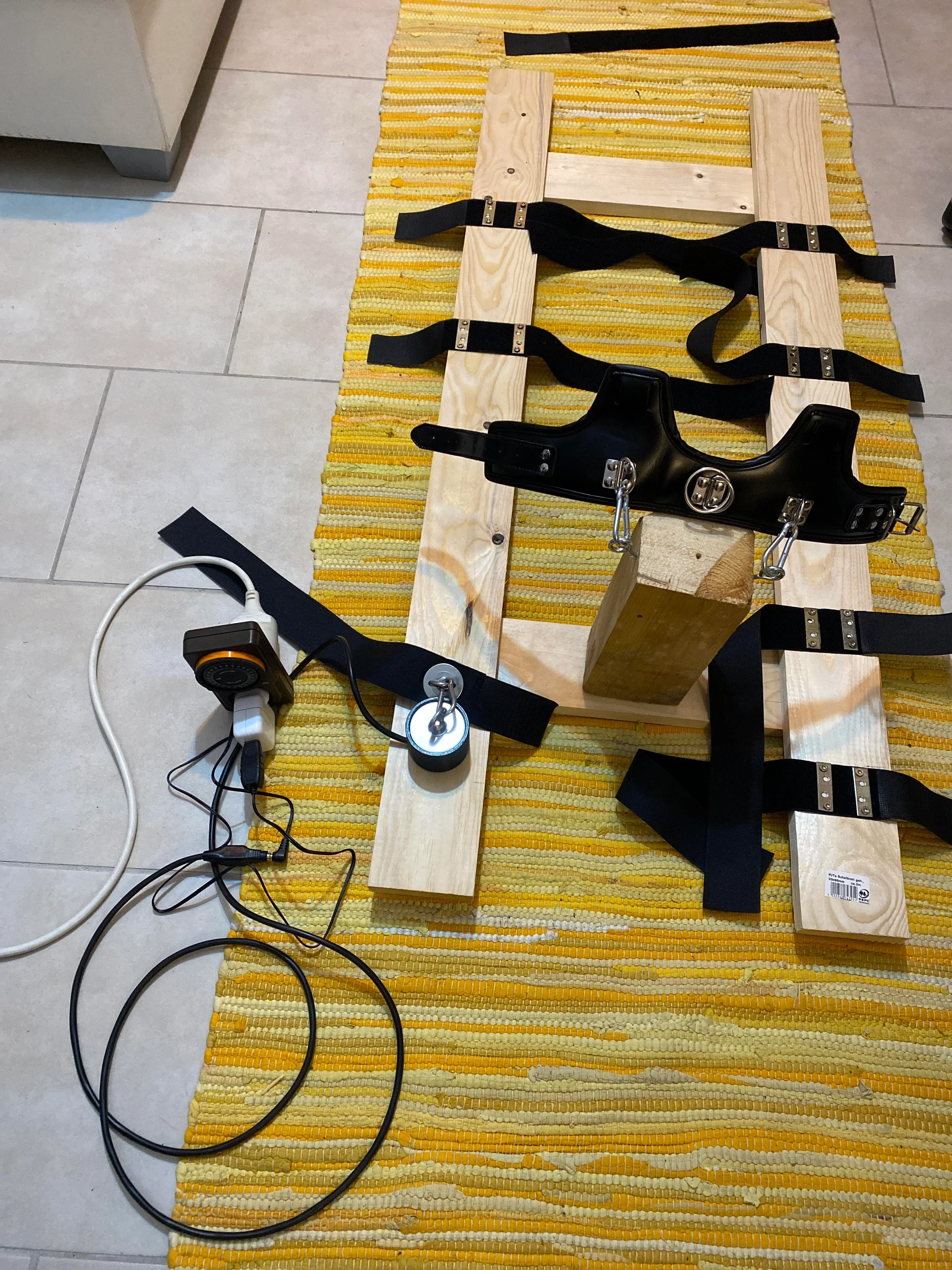
- Adjustable safety belts or neoprene straps with quick-release buckles: allow for rigging and dismantling without complex knots.
- Wall-mounted tie frames or fixed ceiling rings: provide stable anchor points for advanced setups.
- Gloves, joint protectors, and floor mats: essential for preventing bruises and intense friction.
As specialized forums remind us, tying oneself is good, but being able to quickly untie oneself is the critical step that differentiates a controlled practice from a risky situation. Investing in quick-release tools from the start is an act of responsibility.

Progressive Rigging Techniques and Basic Positions
Self-bondage is based on a logical progression. It is preferable to master individual ties before combining multiple areas of the body.
Fundamental Steps
1. Wrist or Arm Ties: Start by tying your hands together in front of you with an adjustable chair knot, then gradually move up to the elbows or shoulders depending on your comfort level. The armbinder is a key piece that restricts arm movement and intensifies the feeling of vulnerability.
2. Leg Ties: Once the arms are secured or mastered, tie your ankles and then your calves. Avoid tight, crisscrossed positions that can cut off circulation. Wide belts or elastic straps are recommended for the first sessions.
3. Combinations and Containment Frames: For total restriction, padded rigid structures are available on the market. They simulate constraint without risking tying a knot that could block in case of pain.
Time Management, Monitoring, and Exit Protocol
The duration of a self-bondage session should be strictly controlled. Always leave a visible or audible alarm to remind you of the time. If you feel persistent tingling, extreme paleness, or severe pain, immediately cut the ties. Never try to extend a session by endurance.
After cutting or untying, adopt a progressive exit protocol:
- Slowly relax in a sitting or prone position.
- Gently massage the pressured areas to reactivate circulation.
- Rehydrate and observe your body for at least twenty minutes before resuming your normal activities.
Psychological Aspects and Post-Session Hygiene
Self-bondage also touches on the mental sphere. Many practitioners use this experience to work on letting go, managing stress, or exploring a form of tactile meditation. It is normal to feel peaks of anxiety or, conversely, a profound sense of calm. Note your sensations in a personal journal to refine your approach.
Hygiene should not be neglected. Wash and disinfect your ropes or straps after each use. Store them in a dry container away from direct light. For setups near sensitive areas, always use hypoallergenic materials and rinse the skin thoroughly with a pH-neutral soap.
Conclusion: Towards an Autonomous and Conscious Practice
Mastering self-bondage requires patience, knowledge of your body, and an uncompromising respect for safety rules. By starting with simple setups, investing in appropriate equipment, and listening to your body's signals, you will transform this solo practice into a true tool for personal exploration. Dedicated French-speaking communities continue to share tutorials and experiences to make this discipline more accessible and safer. Explore, learn, and proceed at your own pace to fully enjoy the benefits of self-bondage.
Never forget to play in complete safety!
Be Geek, Be Kinky!

You may also like

Disability and Sexuality: Breaking Down Taboos for Guaranteed Intimate Fulfillment
Summer infidelity: should you confess everything or protect your relationship by remaining silent?
Is my partner really my soulmate? What science reveals about relationship doubts.
Uniform Fetish: What Your Attraction to Firefighters or Police Officers Reveals About Your Intimate Life
Couple's vacations: when the quest for the perfect photo puts stress in the spotlight.